Writing
Articles, essays & talks
Peer-reviewed articles and public writing on AI safety, governance, and the humanities. For the full list, see Research and Google Scholar.
Peer-reviewed & academic
- “Comparative Global AI Regulation: EU, China, and the US” — arXiv:2410.21279
- “The Crisis of Artificial Intelligence: A New Digital Humanities Curriculum” — IJHAC (2023)
- “Can GPT-3 Pass a Writer's Turing Test?” — Journal of Cultural Analytics (2020)
Full list on Research and Google Scholar.
Essays & LinkedIn articles
Writing on AI, in public
Two dozen essays and posts on AI trends, education, and the geopolitics of technology (2023–2026).
2026
February 26, 2026 · LinkedIn Post
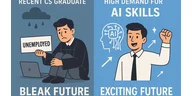
Contrasts weak entry-level CS hiring with rising demand for AI-fluent workers who can combine technical judgment with domain expertise.
February 26, 2026 · LinkedIn Post
Marks the humane-studies program's anniversary by connecting Kenyon's interdisciplinary tradition to a decade of human-centered AI teaching.
2025
November 23, 2025 · LinkedIn
Argues that AI changes the value of programming from routine code production toward problem framing, systems judgment, and applied expertise.
August 23, 2025 · LinkedIn
Frames AI as a broad human and institutional challenge rather than a narrow engineering specialty owned by technical teams alone.
August 12, 2025 · LinkedIn
Offers practical career advice for graduates entering AI by building durable moats across tools, taste, projects, and human context.
February 19, 2025 · LinkedIn
Explores how personal AI systems can capture mentoring patterns, automate recurring knowledge work, and extend expert attention.
February 2, 2025 · LinkedIn
Uses an email format to think through AI consciousness research, evaluation limits, and the difference between behavior and experience.
January 30, 2025 · LinkedIn
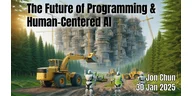
Connects programming's future to human-centered AI: clearer intent, better evaluation, and collaboration between builders and domain experts.
2024
May 16, 2024 · LinkedIn
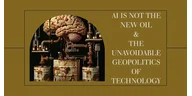
Pushes back on simple resource metaphors for AI and emphasizes infrastructure, compute, talent, regulation, and geopolitical leverage.
May 15, 2024 · LinkedIn
Reads competitive AI demos as strategic signaling, market positioning, and pressure on rival labs as much as product disclosure.
March 11, 2024 · LinkedIn
Surveys the contest among major AI labs, platforms, and business models as capability jumps reshape the competitive landscape.
February 28, 2024 · LinkedIn
Looks at automation through mundane service-work examples to ask where AI adds value and where workflows still need people.
February 16, 2024 · LinkedIn
Compares video generation and long-context models as different kinds of progress: expressive media capability versus reasoning workspace.
January 17, 2024 · LinkedIn
Describes the move from isolated model demos to organizational deployment, governance, education, and social consequences.
2023
December 25, 2023 · LinkedIn
Interprets Google's Gemini paper as a technical document and strategic signal, separating benchmark evidence from product narrative.
December 20, 2023 · LinkedIn
Uses the shocks of 2023 to forecast the next year of AI adoption, competition, institutional response, and public expectation.
December 19, 2023 · LinkedIn
Examines how polished AI demos create wonder, hide scaffolding, and shape public perception of model capability.
December 16, 2023 · LinkedIn
Considers open-source AI as a force for diffusion, experimentation, governance tension, and competition with closed frontier systems.
December 7, 2023 · LinkedIn
Evaluates a new AI release against prior expectations, asking whether it represents a leap forward or an uneven catch-up move.
December 5, 2023 · LinkedIn
Frames AI's near future through competing myths of liberation and uncontrolled creation, with governance and responsibility at stake.
November 3, 2023 · LinkedIn
Explains why transformer architecture matters for understanding modern AI capability, limits, scaling behavior, and design tradeoffs.
October 19, 2023 · LinkedIn
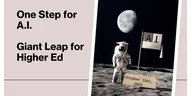
Makes the case that higher education needs integrated AI learning across the liberal arts rather than isolated technical training.
October 16, 2023 · LinkedIn
Traces AI's progression from earlier systems to modern generative models, emphasizing how capability shifts change social questions.
September 28, 2023 · LinkedIn
Looks at the race dynamics around AI adoption and competition, especially how institutions respond after falling behind.
24 articles · Follow on LinkedIn →